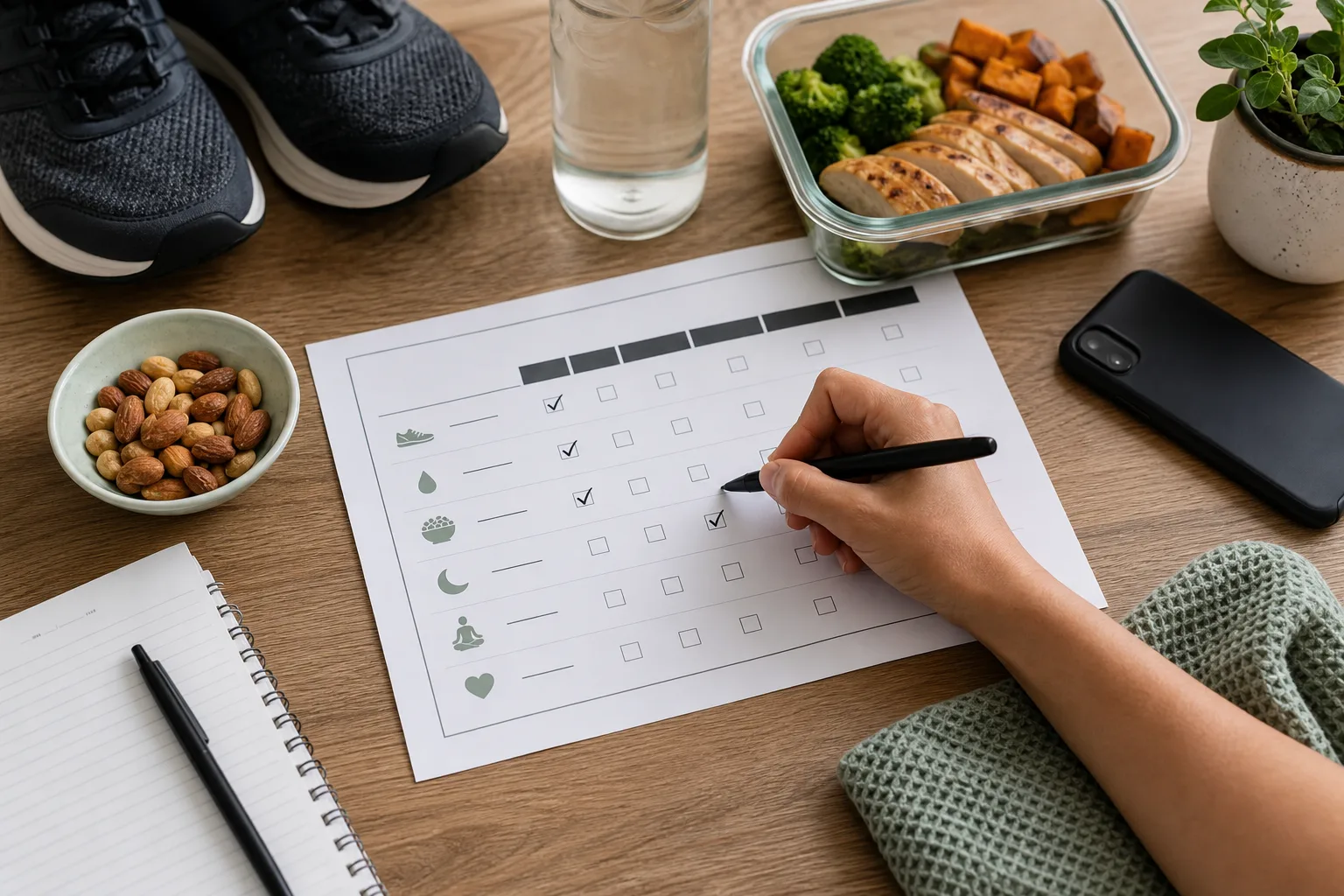


Most people treat discipline vs motivation like a personality test.
Motivated people do the work. Disciplined people do the work when they do not feel like it. In practice, motivation is the emotional spark that helps you start, while discipline is the repeatable structure that helps you keep going when that spark fades.
That is a bad way to think about change.
Motivation is useful, but it is unstable. It rises after a good conversation, a new goal, a hard look in the mirror, or a painful moment. Then real life shows up. You get busy. You sleep badly. Work gets stressful. Your body hurts. The scale does not move. The old routine starts looking easier than the new one.
If you are trying to build lasting habits, stay consistent with personal goals, or stop falling off every time motivation dips, this is the part that matters. Discipline is what carries you after that first emotional spark fades. But even discipline is not magic. The people who look disciplined usually do not win because they have unlimited willpower. They win because they build systems that reduce how much willpower they need.
That is why this guide focuses on the difference between discipline and motivation, why motivation alone often fails, and how to make discipline more sustainable with practical tools like minimums, visible cues, tracking, habit-building, and reset rules so you can keep making progress through stress, fatigue, and setbacks.
Discipline vs motivation starts with feeling versus structure
Motivation says, "I want this."
Discipline says, "This is what I do next."
That difference matters. A motivated person may work hard for two days and disappear for three weeks. A disciplined person may do something smaller, but repeat it long enough for it to matter.
The goal is not to kill motivation. The goal is to use motivation while it is available, then turn it into a structure before it fades.
A structure can be simple:
- A walk scheduled after breakfast.
- A protein-forward meal already planned.
- A bedtime alarm that protects sleep.
- A Sunday checklist for the week.
- A default grocery list.
- A rule that the workout can be short, but it cannot be skipped twice.
That is the practical side of discipline. It is not dramatic. It is not inspirational. It is a boring advantage that compounds, and it is essential for lasting change.
The problem with relying on motivation
Motivation is great at starting things, but relying solely on it is bad at maintaining them.
You can feel motivated after watching a video, reading a quote, or setting a new goal. The problem is that many people rely on motivation even though life does not care how motivated you felt on Monday. By Thursday, the same goal is competing with fatigue, hunger, work, family, stress, and old habits.
If the only plan is "try harder," the old routine wins.
This is why so many people keep restarting. They are not failing because they do not care. They are failing because their plan depends on an emotion that was never designed to stay high all the time and shifts with external factors.
Self discipline starts with fewer decisions
One of the fastest ways to build discipline is to remove decisions.
If you decide every day whether you will work out, what you will eat, when you will go to bed, and whether you will track progress, you are burning energy before you even start. The disciplined move is to decide once, then repeat the default so it is easier to stay productive.
Try this:
- Pick the same three workout windows every week.
- Choose two breakfast options you can repeat.
- Set one daily movement target.
- Keep the same bedtime target on weeknights.
- Review progress on the same day each week.
This is not about making life rigid. It is about protecting the things you say matter.
The more often a good action is already chosen, the easier it is to stick to the plan instead of negotiating with yourself.
Discipline does not mean going harder every day
There is a fake version of discipline that sounds tough but breaks people down.
It says every workout has to be intense. Every meal has to be perfect. Every missed day means you failed. Every setback becomes proof that you do not have what it takes.
That is not discipline. That is an all-or-nothing trap.
Real discipline is sustainable. It includes recovery, sleep, better planning, and pacing so you can stay focused when setbacks happen, plus the ability to restart quickly. That kind of consistency can carry into other aspects of life, not just workouts or meals. The person who gets back on track the next meal is usually better equipped to handle challenges than the person who tries to be perfect for six days and quits after one bad night.
For a broader view of resilience and why people use symbols, rituals, and reminders to stay grounded, see the Build Mental Muscle guide to resilience symbols and meanings
A simple discipline system
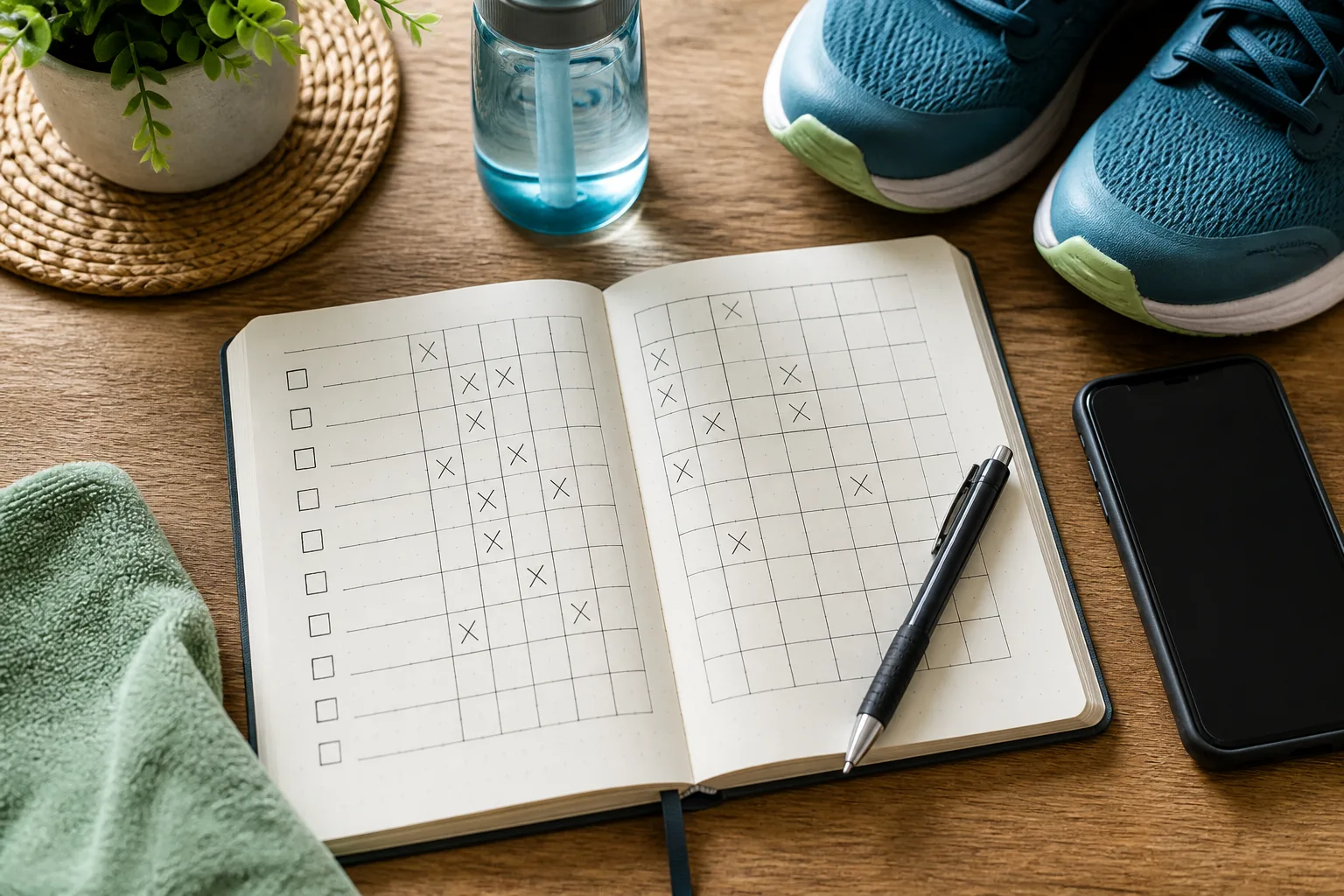
Use this four-part system for any goal that requires consistency.
It supports habit formation over time, helping you create routines, maintain focus on the process, and build the discipline that can form lasting behavior—since it often takes 18 to 264 days to form a new habit through discipline, that consistency is what drives success. The same simple system can also support goals in business.
1. Define the minimum
The minimum is the smallest version of the habit that still counts.
For exercise, it might be a 10-minute walk. For food, it might be hitting your protein target at breakfast. For writing, it might be 150 words. For sleep, it might be getting in bed by a set time.
The minimum matters because it keeps the identity alive and small wins build confidence. You are still the kind of person who does the thing, even on a hard day, which keeps you moving through the larger journey.
2. Make the next action visible
Discipline gets easier when the next action is obvious, and visible cues help the brain repeat the behavior with less friction over time.
Leave the walking shoes by the door, and set out your gym clothes before a planned workout or gym session. Put the water bottle on the counter. Keep the grocery list in your phone. Put the workout on the calendar. Write tomorrow’s first task before you end today; for example, open the document you’ll start with in the morning.
If the next step is hidden, your old habit gets a vote.
3. Track only what changes behavior
Tracking can help, but only if it changes what you do next.
You do not need to track everything. Track the few inputs that matter most:
- movement
- sleep
- meals
- workouts
- alcohol
- stress triggers
- weekly body-weight trend, if weight loss is the goal
The point is not to punish yourself with data. It is to use it to keep better balance around what matters instead of overreacting to one metric. The point is to stop guessing and track the effort that actually moves progress.
4. Build a reset rule
A reset rule is what you do after a miss, because everyone will struggle at some point.
Examples:
- If I miss a workout, I walk 10 minutes the next morning.
- If dinner goes off plan, breakfast is back to normal.
- If I sleep badly, I lower workout intensity but still move.
- If I miss two days, I do the smallest version on day three.
Without a reset rule, a bad stretch is harder to push through, and one miss can start to grow.
When discipline is not the whole answer
Discipline matters, but it is not the whole story.
Sleep, stress, medications, hormones, appetite, pain, and medical history are all external factors that can affect how easy or hard a health goal feels. The CDC notes that healthy weight loss is built around a specific plan, healthy eating patterns, physical activity, sleep, and stress management. NIDDK also recommends looking for weight-loss programs built around realistic goals, healthy eating, physical activity, and support.
If you are doing the basics and still feel stuck, it may be time to stop treating the entire problem as a character flaw. For people who want medical support, Get Pep’d offers licensed weight-loss support where providers review patients and prescriptions may be offered when medically appropriate.
That does not replace discipline. Better conditions can go a long way toward making consistency easier across different aspects of life and in the wider world, while supporting the mental clarity needed for effective leadership.
The better question
The real question is not "Am I motivated or disciplined?"
The better question is: "What system would make the right action easier tomorrow?" That is how you keep achieving long-term goals.
That is where lasting change starts. Not with a speech. Not with a perfect week. Not with hating yourself into action.
Build the system. Protect the minimum. Reset fast. Let motivation help when it shows up, but if you want to succeed, do not make your future depend on it.
FAQ: discipline vs motivation
Is it better to be motivated or disciplined?
It is better to have both, but I would not build a serious goal around motivation alone; motivation can come from intrinsic motivation or extrinsic motivation. Motivation is useful because it creates energy at the start. Successful people often pair discipline with intrinsic motivation instead of relying on discipline alone. Discipline is more useful over time because it gives you a default action when that energy is gone.
The strongest setup is simple: use motivation and desire to choose the goal, then use discipline to build the system for long-term success. That means planning the next workout before you feel inspired, setting up the meal before you are hungry, and creating a reset rule before you miss.
Does discipline beat motivation?
Discipline usually beats motivation for long-term consistency because it does not need the same emotional charge. Motivation may feel easier at first, but discipline is what keeps the plan alive when work, stress, sleep, hunger, or frustration make life messy.
That does not mean discipline should feel harsh. Good discipline reduces friction. It makes the next right action easier, smaller, and more repeatable. If your version of discipline requires a perfect mood and a perfect week, it is still motivation wearing tougher clothes, and it can tend to fade when conditions are not ideal.
What is the difference between motivational and discipline?
In plain language, motivation is the reason you want to act, and discipline is the structure that helps you act anyway. Motivation sounds like "I want to change." Discipline sounds like "This is what I do next."
That difference matters because a health goal has to survive ordinary days. You may not feel excited about walking, prepping food, sleeping on time, or tracking a weekly trend. A discipline system keeps those choices visible enough that you do not have to renegotiate the whole goal every day.
What are the 4 D’s of discipline?
People use different versions of the "4 D’s," but for a real-life system I would use direction, decision, default, and do-over to help you strive toward a goal instead of waiting for motivation.
Direction is the goal you are aiming at, not chasing first place every day. If this explanation helps, feel free to share the post. Decision is the specific action you choose before the day gets messy. Default is the repeatable version of that action. In habit formation, research commonly cites 18 to 264 days to form a new habit, so consistent practice matters until the behavior feels like second nature. Do-over is the reset rule that keeps one miss from becoming a month off track.
That last piece is the one most people skip. Discipline is not only what you do on a good day. It is how quickly you return to the system after a bad one.
Sources
Note: Build Mental Muscle is wellness and personal-development content, not medical advice. Talk with a licensed health professional for personal medical questions.